
Livingston County Arrest Reports
Livingston County publishes no complete multi-day arrest ledger. Its nearest offering is the Sheriff's press-release archive. Each release tells the story of one chosen incident. A crash, a search, a weapons case, a missing-person event. Nobody promises a row per booking. No 72-hour or weekly window appears anywhere in them.
Dates can mislead, too. A release may follow an arraignment or the close of an investigation. By publication, the arrested person may be out on bond or moved elsewhere. News adds useful context across several days. It cannot tell you who sits in the Livingston County Jail right now.
Read Livingston's Multi-Day Record
Start with the narrative. Then dig for the case file. A multi-day search works best by date range or agency, not by name alone. Keep four dates straight: publication, incident, arrest, and court. They rarely match, and the mismatches explain why stories seem out of order.
- Review the sheriff press releases for the relevant week and note the incident date, agency, place, and any case details.
- Check the WHMI local archive for added context, while recognizing that it is selective journalism.
- Use the official MiCourt register for the 53rd District Court and, when a felony proceeds, the 44th Circuit Court.
- Ask the Livingston County Jail about present custody instead of inferring status from an older report.
- Request the police or booking record through Central Records and county FOIA when the published account is incomplete.
Same-day searches take a shorter path. If someone entered custody within the last day, begin at the jail. Arrested Today points you there. Skip the archive-digging.
Fields in Livingston Arrest Reports
Livingston County offers no public arrest-log screen with columns to copy. So the table splits what a press release might mention from what lives in the booking file or court register. Never fill a missing name or photo from rumor or an unrelated private site.
| Record detail | Best source and limit |
|---|---|
| Incident date and location | Sheriff release, police report, or court complaint; publication may occur later. |
| Person's name | May be withheld by news outlets; match official records with another identifier. |
| Arresting agency | Police report or booking record; Livingston includes sheriff, city, township, and state police agencies. |
| Booking date and number | Jail booking file; not guaranteed in a press release. |
| Charges | Initial claims may appear in news; verify the filed wording and later changes in court. |
| Bond and court date | MiCourt register or court clerk; both can change after first publication. |
| Booking photo | No official public photo roster was found; request a maintained, releasable image from the custodian. |
"Lodged in the jail" marks a moment. It says nothing about custody today. Charges listed in an early story can shrink or vanish as the case moves.
Livingston Weekend Report Gaps
Livingston County promises no weekend or holiday publication rhythm for arrest reports. No Monday batch. No daily cutoff. No weekly refresh. Reading release order as a weekend crime surge would mislead, because releases track editorial and investigative choices rather than every jail intake.
Delays happen for good reasons. An agency may finish an investigation first, wait for court action, or hold back facts that could expose a victim. Court offices keep their own calendars. Search the days around your target date. Archive silence never proves that no arrest took place.
Note: Publication patterns cannot be converted into arrest trends unless the source is a complete, consistently defined data set.
Livingston Arrest Report Archives
How long does a Livingston County arrest report stay online? The county publishes no fixed answer. No rule says an arrest log must keep entries for three days, seven days, or any other set span. A press release can linger online long after custody ends. The opposite happens too. A page can vanish while the booking file itself still sits in agency hands.
Retention law is a separate matter. Michigan General Schedule 11, series 11.210, covers jail inmate jackets. The series lists intake records, booking cards, mug shots, sentencing, transfer, release forms, arrest cards, and warrants. Its baseline is release plus ten years. Destruction then follows, subject to the schedule's application, agency-specific schedules, and legal holds. None of that promises ten years of online access.
For an older arrest, ask the sheriff records custodian whether the series was retained, destroyed under an approved schedule, or transferred. The Archives of Michigan county guides can point toward historical holdings, though they offer no current jail service. Confirm the transfer locally first. Once a custodian confirms it, the official county-guide directory is the natural next stop.
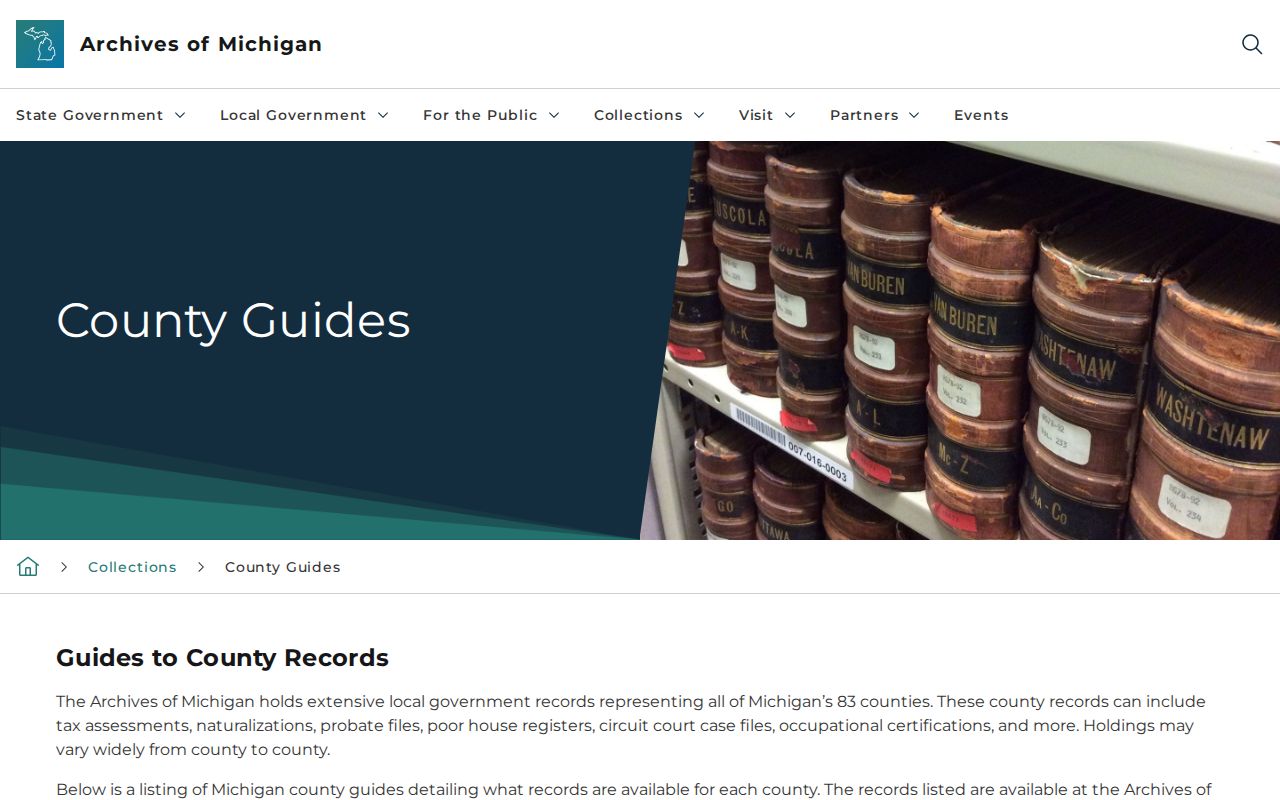
The archive interface locates preserved records. It shows nothing about current Livingston County arrests or who is in custody.
WHMI Livingston Arrest Coverage
WHMI 93.5 keeps a rolling archive of Livingston County news. Sheriff and state police activity sits beside municipal police calls, court events, searches, and arrests. The cadence is purely news-driven. It is not a booking window, and it does not claim to count every arrest in Howell, Brighton, Fowlerville, or the surrounding townships.
One Hartland story is telling. It described an arrest on felony and misdemeanor counts, several participating agencies, a search, and a court date. WHMI withheld the name for victim safety. That choice explains why a narrative archive can never serve as a name-complete blotter or booking-photo gallery, and the WHMI local news archive itself offers dated stories across the county.
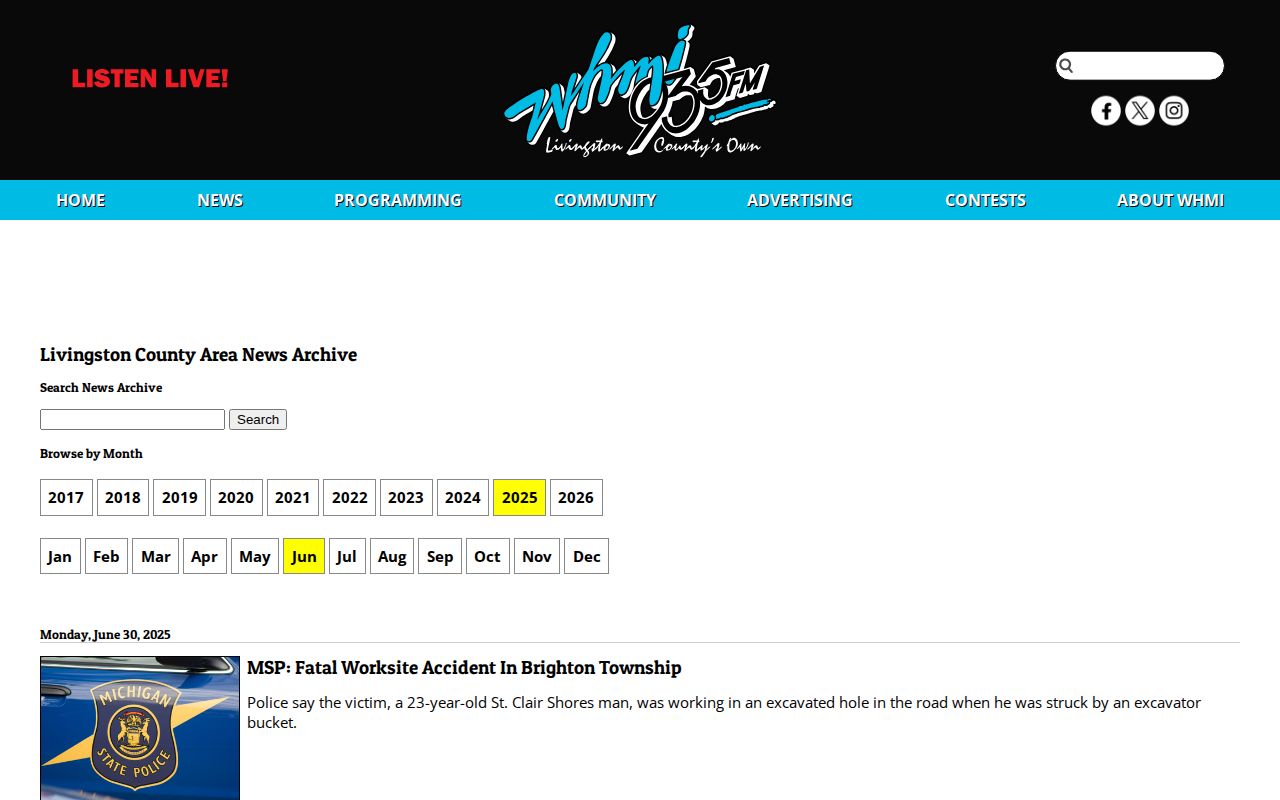
Context comes easy here. Verification still requires the jail or court. The WHMI Hartland arrest and court story shows how selectively names get reported.
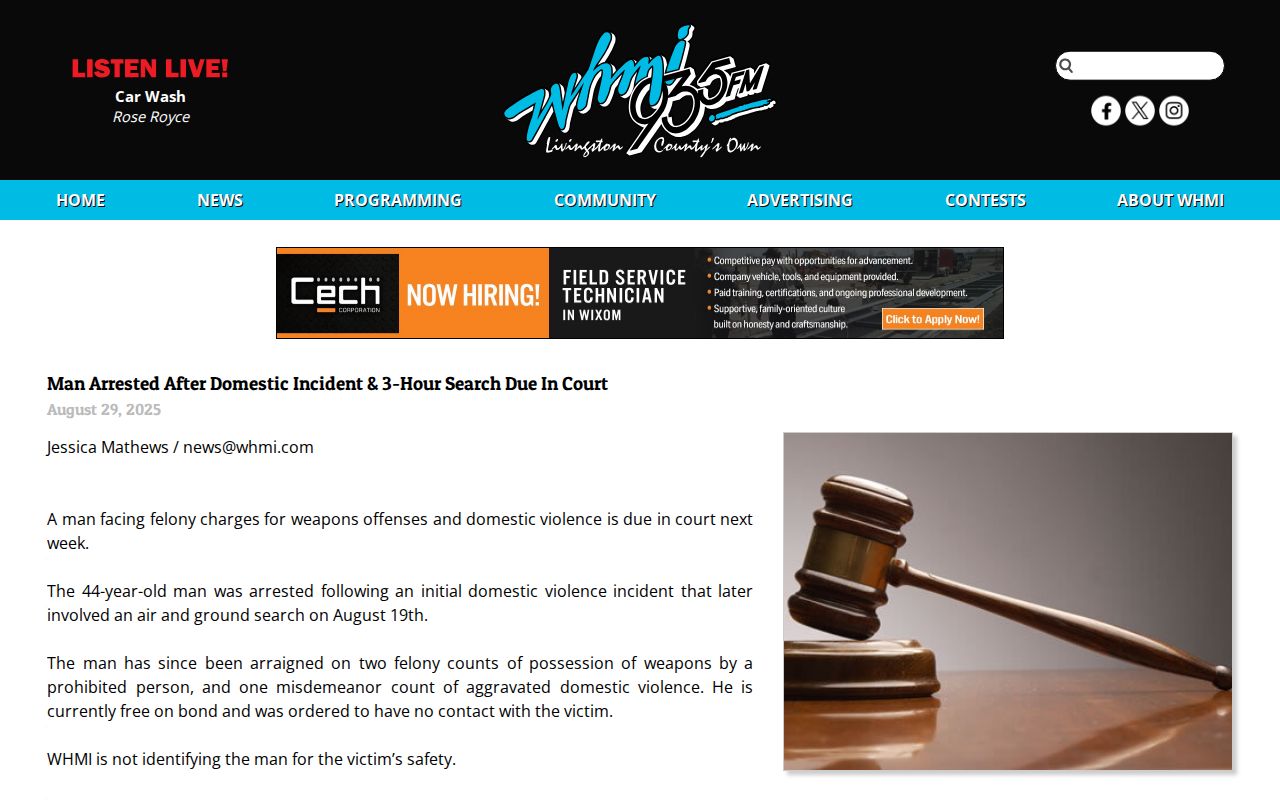
This is a news article, not a booking photo or jail list.
Unofficial Livingston Arrest Archives
Start with official sources before anything else. One commercial publisher, Mugshots.com, runs a Livingston County archive of past booking entries. Its historical filters cover 2013 through 2020. Its city links sort older material. The publisher itself cautions users that listings may be stale or wrong. Treat it as a retrospective file. It is not a live feed of who is in custody today.
Other big services come up empty for Livingston County. RecentlyBooked's Michigan index skips the county entirely. Michigan Arrests.org leaves it off its county list too. There is no usable local Busted Newspaper or Mugshots.zone page either. Their posting patterns from other counties tell you nothing here. Never borrow them.
Check any dated entry against the arresting agency and MiCourt. A historical filter reflects a private site, not county policy. A private copy can linger online long after the official record changes or disappears.
Verify Livingston Arrest Outcomes
The courtroom is where an arrest turns into a legal case. In Livingston County, the 53rd District Court handles misdemeanors. It also opens the first phase of most felonies. A felony can then be bound over to the 44th Circuit Court for the later stages. That court handles the later stages. So one court alone may not hold the whole story.
Pull the case number, party name, filing date, charges, hearings, and disposition. The disposition is the recorded outcome. An arrest is a separate event entirely. Courts sometimes amend or dismiss a charge, while an older news story keeps the first wording. Frame any records request around agency and date rather than a news summary.
Note: News archives, historical publishers, court registers, and custody systems cover different stages and should never be treated as interchangeable.
Request Older Livingston Reports
Older reports require a request, and the right one starts with the right office. The Livingston County Sheriff's Central Records unit pushes criminal report and field contact requests through the county FOIA process. Municipal departments run their own routes. A Howell, Brighton, or Fowlerville incident may begin with that city's police office instead. A town named in a story marks the location. It does not prove which agency holds the file.
Give each request firm boundaries. Include a date range, full name, incident location, arresting agency, case number if you have one, and the exact document wanted. Ask for each item separately, whether that is a police report, booking card, release form, or a booking image. Most police reports take seven to ten days, the county says. That is a document estimate, not an arrest publishing schedule. Exemptions can trigger redaction or withholding.
Court history lives in two places. District court usually holds the arraignment and preliminary work. Circuit court carries the felony path after that. For very old jail records, ask the local custodian about retention or transfer before trying the state archives. That order keeps the chain intact, from incident to booking to court outcome.